“Everything you need to plan your trip to Morocco with peace of mind, confidence, and the expertise of our local Berber team”
Planning a trip to a country as exotic and vibrant as Morocco requires knowing a few practical details in advance about customs, climate, currency, and local customs. Below, we’ve put together a list of structured and verified recommendations to help you feel at home from the moment you arrive.
The main ways to get to Morocco are by boat, plane, or even by driving your own vehicle across the border.
If you choose to cross the strait from Spain, you can do so primarily from Tarifa to Tangier Ville, or from the port of Algeciras to Tangier Med, whose cargo and vehicle unloading terminal is located about 40 km from the beautiful city of Tangier.
Traveling by plane is fast and convenient. Casablanca’s Mohammed V Airport is the main airport in the Kingdom of Morocco, but there are a total of 15 domestic and international airports with excellent connections to Europe, the Americas, and Africa, including those in Marrakech, Rabat, Fez, Agadir, Tangier, Ouarzazate, and Nador.
Buy your ticket well in advance to take advantage of low-cost fares. Prices tend to rise significantly as the travel date approaches or during peak travel seasons.
Please note that at all Moroccan port and airport terminals, **only passengers with a ticket are permitted to enter the terminal area**. For this legal reason, your Saha Tours guide or driver is required to wait for your arrival at the exit, in the outdoor lobby designated for passenger pickup outside the building. Look for them holding the identification sign!
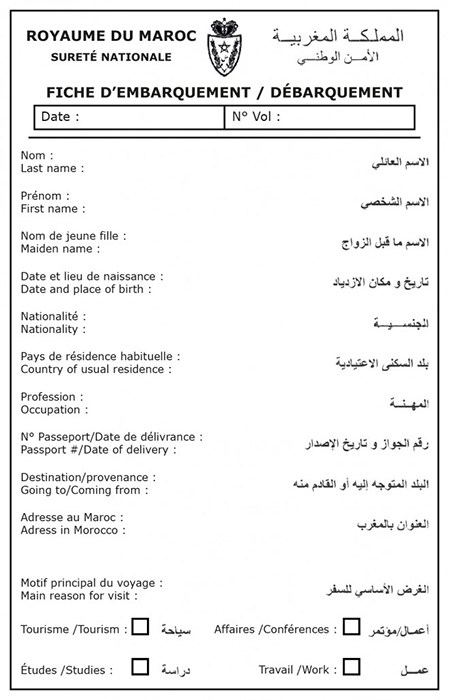
If you are a citizen of the European Union, you do not need a visa to travel for tourism purposes, but you do need a valid passport that will remain valid for at least another 6 months.
If you are a citizen of a country outside the EU, we recommend that you contact the nearest Moroccan embassy or consulate in your home country to confirm the entry requirements.
Morocco boasts a diverse landscape and distinct geographical regions. Temperatures vary considerably from one region to another, though the climate remains mostly mild and pleasant year-round, except at high altitudes.
Mild winters and dry summers cooled by gentle sea breezes.
An ideal, cool, and mild oceanic climate for enjoying the coast.
A harsh continental climate in the Atlas Mountains, with cold, snowy winters.
An arid and semi-desert climate with significant temperature differences between day and night.
Spring/Summer: Lightweight cotton clothing and breathable footwear. Remember to bring a light jacket in case it gets chilly at night in the desert. Fall/Winter: Thermal clothing, waterproof jackets, and warm footwear, especially in Ouarzazate, the Atlas Mountains, and the Sahara Desert.
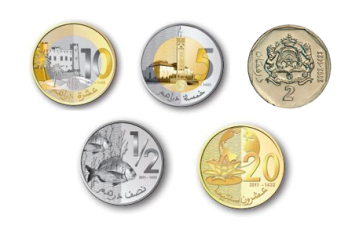
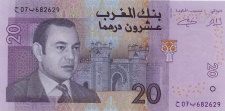
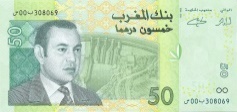
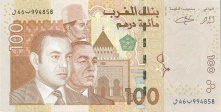
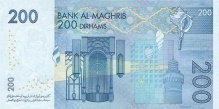
The official currency is the Moroccan dirham (MAD), which is divided into 100 centimes. The main denominations in circulation are 200, 100, 50, and 20 MAD bills, as well as coins.
200 and 100 MAD
10, 5, 1 MAD and cents
Euros, pounds, and U.S. dollars can be easily exchanged at local banks, airports, or authorized currency exchange offices in any city.
The standard voltage is 220V and the frequency is 50 Hz. Plugs and outlets are Type C and E (double round-pin), identical to those used in Western European countries. If your home country uses different plug types, be sure to bring your international travel adapter.
220 V • Type C/E
In Morocco’s souks and medinas, haggling is more than just a way of doing business: it is a ritual of hospitality, dialogue, and mutual respect. It is an integral part of our popular culture.
“It’s not so much about the actual cost, but rather about you and the seller reaching a friendly agreement where both of you are satisfied.”
If the initial price is high, you can politely suggest a discount of around 50%. The merchant will likely offer a compromise.
Mutual respect is essential. A good salesperson values conversation, friendliness, and the fact that you take the time to talk to them without rushing.
A greeting ("Salam Alaykum") or a sincere "thank you" ("Shukran") opens more doors and demonstrates genuine cultural respect.
If you can't agree on a price, thank them politely and move on. No one is obligated to buy.
The sale of alcoholic beverages is limited to certain large hotels, liquor stores, and licensed restaurants. Please consume them as respectfully and discreetly as possible. In many riads and restaurants that are not licensed to sell alcohol, **you will be allowed to bring your own wine or beer**, but it is always essential to ask first out of courtesy. Your guide will be happy to recommend the best places where alcohol is sold. *** Translated with www.DeepL.com/Translator (free version) ***
Although Saha Tours has its own liability insurance, we strongly recommend that you **purchase your own personal travel insurance** in your home country. This personal insurance covers you in the event of unforeseen health issues, accidents while riding ATVs or buggies, sudden flight cancellations or delays in international transportation, as well as incidents involving lost luggage.
Staying connected is essential during your journey through Morocco’s desert and beautiful medinas.
00 212 + Moroccan area code (without the 0) + Recipient's number
00 + International country code
Roaming with your home carrier can be extremely expensive. Buy a local prepaid SIM card ("Orange," "Inwi," "Maroc Telecom") as soon as you cross the border or arrive at the airport. You can get them for just a few euros.
Save these essential numbers for making direct emergency calls in Morocco:
190
Public safety assistance in urban settings.
150
Urban fire and rescue services.
177
Traffic police and road incidents.
150
Medical emergencies.
0890203040
High-speed lines and intercity routes.
0522539040
Hotlines for flight and baggage information.
Morocco is an ideal and safe destination for a family vacation. Travel breaks down prejudices, sparks the imagination, and is undoubtedly the best cultural gift you can give a young child or teenager.
“We design itineraries so that the youngest members of the family can interact directly and feel like the stars of their own Berber adventure.”
They need exactly the same travel requirements as you: a valid passport with at least 6 months remaining before expiration.
Ride a dromedary across the golden dunes, glide down the slopes on eco-friendly sandboards, and sleep under a blanket of millions of stars.
Feed the capuchin monkeys that live in the wild and in complete freedom in the ancient cedar forests of Azrou.
Take leisurely walks through picturesque palm groves and visit local schools or community groups to share a smile.
We’ve selected traditional accommodations (riads) with charming pools where you can spend your time relaxing and cooling off.
Baby food, formula, baby cereal, and diapers are readily available at local supermarkets and pharmacies. Your Berber driver will assist you with your grocery shopping if needed.
For travel and hiking in medieval medinas or the desert, we recommend swapping out your traditional stroller for a baby carrier, which offers much greater off-road mobility.
In Morocco, the use of child safety seats is not required by law; therefore, if you would like to reserve an approved child safety seat for your trip, please notify Saha Tours in writing when making your reservation.
Don’t worry! If they’re not keen on trying tagine or couscous, all of our featured menus offer traditional alternatives such as kebabs, hand-cut fries, grilled chicken, delicious omelets, or local pizzas.
Bottled water is always a must-have
At Sahatours, we are a local agency specializing in private trips and bespoke tours around Morocco. We design unique experiences featuring private transport, carefully selected accommodation, and local support, enabling you to discover the Sahara, the Imperial Cities, the Atlas Mountains, and much more.
SAHA TOURS is a local Moroccan company STE SAHATOURS.COM (SARL) A.U. Licence No. 18308293 – Tax Identification Number 2523149 – Commercial Register ER-RIACHIDIA Address: RUE 07 AV MOHAMED V S2200, ERFOUD – MOROCCO.